Pilar

Ilha de Itamaraca

#Pernambuco #Brasil #Brazil #Fort

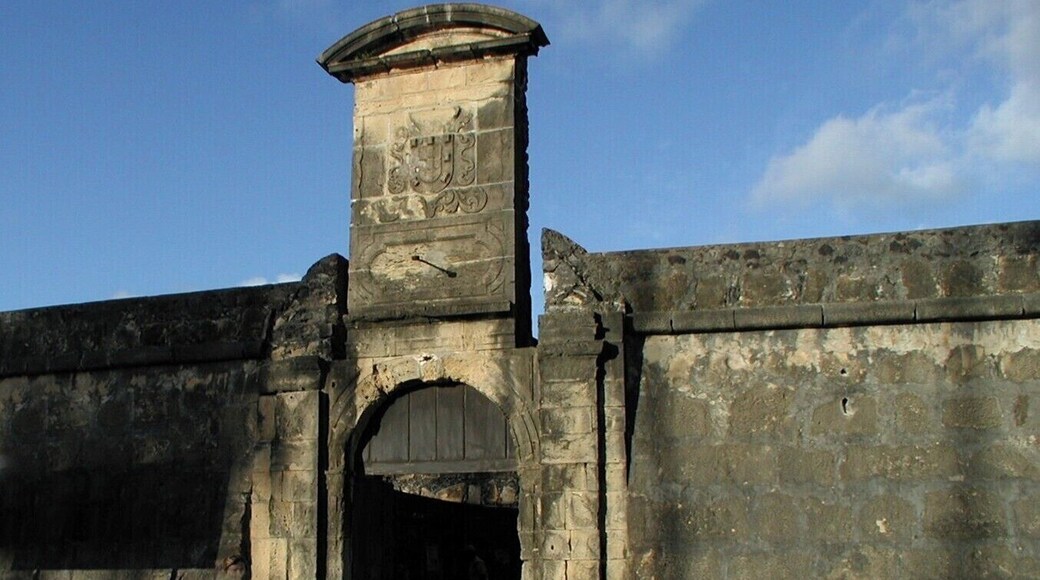
The Fort of Santa Cruz de Itamaracá, better known as Forte Orange, is located on the island of Itamaracá on the northern coast of the state of Pernambuco, Brazil. It was built in taipa by the Dutch in 1631. In 1654, with the defeat of the Dutch, it was in ruins. Later, in 1696, it was rebuilt by the Portuguese, in stone. The old Flemish symbols were exchanged for the arms of the Kingdom of Portugal which are engraved on the gate. Today, the space is occupied by a museum with archaeological fragments found in excavations and panels with reproductions of maps of the time.

O Forte de Santa Cruz de Itamaracá, mais conhecido como Forte Orange, localiza-se na ilha de Itamaracá no  litoral norte do estado de Pernambuco, no Brasil. Foi construído, em taipa, pelos holandeses em 1631. Em 1654, com a derrota dos holandeses, ficou em ruinas. Mais tarde, em 1696, foi reconstruído pelos portugueses, em pedra. Os antigos símbolos flamengos foram trocados pelas armas do Reino de Portugal que estão gravadas sobre o portão. Hoje, o espaço é ocupado por um museu com fragmentos arqueológicos encontrados em escavações e painéis com reproduções de mapas da época.
#Pernambuco #Brasil #Brazil #Fort

The Fort of Santa Cruz de Itamaracá, better known as Forte Orange, is located on the island of Itamaracá on the northern coast of the state of Pernambuco, Brazil. It was built in taipa by the Dutch in 1631. In 1654, with the defeat of the Dutch, it was in ruins. Later, in 1696, it was rebuilt by the Portuguese, in stone. The old Flemish symbols were exchanged for the arms of the Kingdom of Portugal which are engraved on the gate. Today, the space is occupied by a museum with archaeological fragments found in excavations and panels with reproductions of maps of the time.

O Forte de Santa Cruz de Itamaracá, mais conhecido como Forte Orange, localiza-se na ilha de Itamaracá no  litoral norte do estado de Pernambuco, no Brasil. Foi construído, em taipa, pelos holandeses em 1631. Em 1654, com a derrota dos holandeses, ficou em ruinas. Mais tarde, em 1696, foi reconstruído pelos portugueses, em pedra. Os antigos símbolos flamengos foram trocados pelas armas do Reino de Portugal que estão gravadas sobre o portão. Hoje, o espaço é ocupado por um museu com fragmentos arqueológicos encontrados em escavações e painéis com reproduções de mapas da época.
#Pernambuco #Brasil #Brazil #Fort

The Fort of Santa Cruz de Itamaracá, better known as Forte Orange, is located on the island of Itamaracá on the northern coast of the state of Pernambuco, Brazil. It was built in taipa by the Dutch in 1631. In 1654, with the defeat of the Dutch, it was in ruins. Later, in 1696, it was rebuilt by the Portuguese, in stone. The old Flemish symbols were exchanged for the arms of the Kingdom of Portugal which are engraved on the gate. Today, the space is occupied by a museum with archaeological fragments found in excavations and panels with reproductions of maps of the time.

O Forte de Santa Cruz de Itamaracá, mais conhecido como Forte Orange, localiza-se na ilha de Itamaracá no  litoral norte do estado de Pernambuco, no Brasil. Foi construído, em taipa, pelos holandeses em 1631. Em 1654, com a derrota dos holandeses, ficou em ruinas. Mais tarde, em 1696, foi reconstruído pelos portugueses, em pedra. Os antigos símbolos flamengos foram trocados pelas armas do Reino de Portugal que estão gravadas sobre o portão. Hoje, o espaço é ocupado por um museu com fragmentos arqueológicos encontrados em escavações e painéis com reproduções de mapas da época.
#Pernambuco #Brasil #Brazil #Fort

The Fort of Santa Cruz de Itamaracá, better known as Forte Orange, is located on the island of Itamaracá on the northern coast of the state of Pernambuco, Brazil. It was built in taipa by the Dutch in 1631. In 1654, with the defeat of the Dutch, it was in ruins. Later, in 1696, it was rebuilt by the Portuguese, in stone. The old Flemish symbols were exchanged for the arms of the Kingdom of Portugal which are engraved on the gate. Today, the space is occupied by a museum with archaeological fragments found in excavations and panels with reproductions of maps of the time.

O Forte de Santa Cruz de Itamaracá, mais conhecido como Forte Orange, localiza-se na ilha de Itamaracá no  litoral norte do estado de Pernambuco, no Brasil. Foi construído, em taipa, pelos holandeses em 1631. Em 1654, com a derrota dos holandeses, ficou em ruinas. Mais tarde, em 1696, foi reconstruído pelos portugueses, em pedra. Os antigos símbolos flamengos foram trocados pelas armas do Reino de Portugal que estão gravadas sobre o portão. Hoje, o espaço é ocupado por um museu com fragmentos arqueológicos encontrados em escavações e painéis com reproduções de mapas da época.
#Pernambuco #Brasil #Brazil #Fort

The Fort of Santa Cruz de Itamaracá, better known as Forte Orange, is located on the island of Itamaracá on the northern coast of the state of Pernambuco, Brazil. It was built in taipa by the Dutch in 1631. In 1654, with the defeat of the Dutch, it was in ruins. Later, in 1696, it was rebuilt by the Portuguese, in stone. The old Flemish symbols were exchanged for the arms of the Kingdom of Portugal which are engraved on the gate. Today, the space is occupied by a museum with archaeological fragments found in excavations and panels with reproductions of maps of the time.

O Forte de Santa Cruz de Itamaracá, mais conhecido como Forte Orange, localiza-se na ilha de Itamaracá no  litoral norte do estado de Pernambuco, no Brasil. Foi construído, em taipa, pelos holandeses em 1631. Em 1654, com a derrota dos holandeses, ficou em ruinas. Mais tarde, em 1696, foi reconstruído pelos portugueses, em pedra. Os antigos símbolos flamengos foram trocados pelas armas do Reino de Portugal que estão gravadas sobre o portão. Hoje, o espaço é ocupado por um museu com fragmentos arqueológicos encontrados em escavações e painéis com reproduções de mapas da época.

Popular places to visit

Things to do


Other neighborhoods around Pilar

Default Image

Loteamento Enseada dos Golfinhos

Loteamento Enseada dos Golfinhos might not have many top sights, but Pontal da Ilha Beach and Praia de Catuama are two attractions nearby that you can check out.

Loteamento Enseada dos Golfinhos