Tegalrejo
Travel Guide
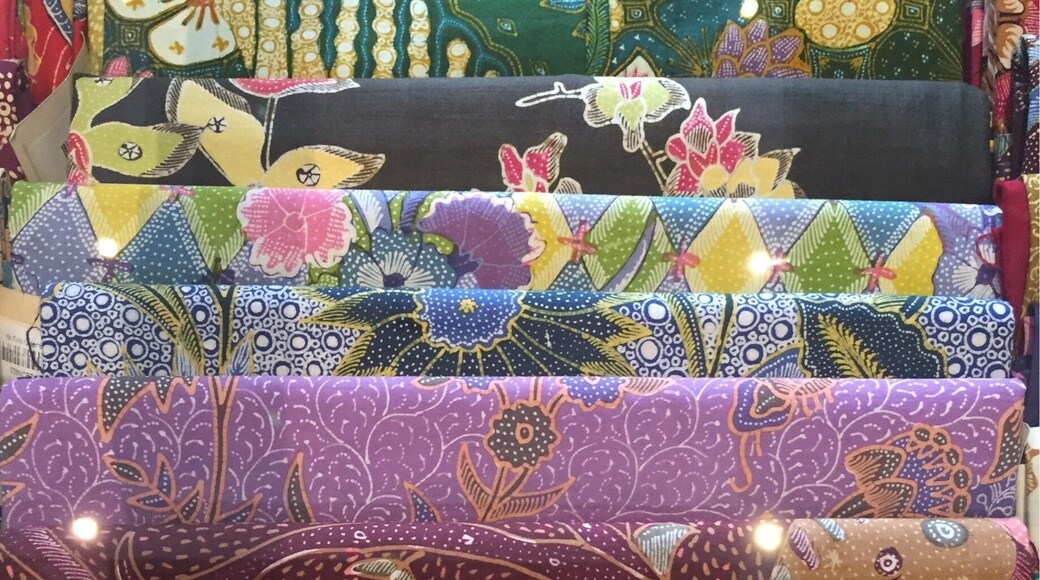
![Batik (Javanese pronunciation: [ˈbateʔ]; Indonesian: [ˈbatɪk]) is a technique of wax-resist dyeing applied to whole cloth, or cloth made using this technique. Batik is made either by drawing dots and lines of the resist with a spouted tool called a canting (IPA: [ʈ͡ʂantiŋ], also spelled tjanting), or by printing the resist with a copper stamp called a cap (IPA: [ʈ͡ʂap], also spelled tjap). The applied wax resists dyes and therefore allows the artisan to color selectively by soaking the cloth in one color, removing the wax with boiling water, and repeating if multiple colors are desired.
A tradition of making batik is found in various countries, including Nigeria, China, India, Malaysia, Philippines and Sri Lanka; the batik of Indonesia, however, is the most well-known. Indonesian batik made in the island of Java has a long history of acculturation, with diverse patterns influenced by a variety of cultures, and is the most developed in terms of pattern, technique, and the quality of workmanship. On October 2009, UNESCO designated Indonesian batik as a Masterpiece of Oral and Intangible Heritage of Humanity.
Source: Wikipedia
These batik clothes are sold at one of the high end hotel's gift shop in Yogyakarta. They are hand drawn and painted and hence command a high price! It ranges over US$200 although some cheap batik at the market can be found for a mere US$2. The difference lies in the quality, the design and also the amount of skill that's needed to make them.
Common batik wear are made from cotton. The ones shown here are silk and limited in quantity produced.
Yogyakarta and Surakata (Solo) are two cities where batik originated in Indonesia.
#unesco](https://images.trvl-media.com/place/1718/09cd56ac-2be9-4518-ac77-e217d037b46b.jpg?impolicy=fcrop&w=1040&h=580&q=mediumHigh)
![Batik (Javanese pronunciation: [ˈbateʔ]; Indonesian: [ˈbatɪk]) is a technique of wax-resist dyeing applied to whole cloth, or cloth made using this technique. Batik is made either by drawing dots and lines of the resist with a spouted tool called a canting (IPA: [ʈ͡ʂantiŋ], also spelled tjanting), or by printing the resist with a copper stamp called a cap (IPA: [ʈ͡ʂap], also spelled tjap). The applied wax resists dyes and therefore allows the artisan to color selectively by soaking the cloth in one color, removing the wax with boiling water, and repeating if multiple colors are desired.
A tradition of making batik is found in various countries, including Nigeria, China, India, Malaysia, Philippines and Sri Lanka; the batik of Indonesia, however, is the most well-known. Indonesian batik made in the island of Java has a long history of acculturation, with diverse patterns influenced by a variety of cultures, and is the most developed in terms of pattern, technique, and the quality of workmanship. On October 2009, UNESCO designated Indonesian batik as a Masterpiece of Oral and Intangible Heritage of Humanity.
Source: Wikipedia
These batik clothes are sold at one of the high end hotel's gift shop in Yogyakarta. They are hand drawn and painted and hence command a high price! It ranges over US$200 although some cheap batik at the market can be found for a mere US$2. The difference lies in the quality, the design and also the amount of skill that's needed to make them.
Common batik wear are made from cotton. The ones shown here are silk and limited in quantity produced.
Yogyakarta and Surakata (Solo) are two cities where batik originated in Indonesia.
#unesco](https://images.trvl-media.com/place/1718/09cd56ac-2be9-4518-ac77-e217d037b46b.jpg?impolicy=fcrop&w=1040&h=580&q=mediumHigh)
Visit Tegalrejo

Hotel Tentrem Yogyakarta

Yogyakarta Marriott Hotel

Hyatt Regency Yogyakarta

Allure Villa Yogyakarta

Villa Verde the garden

Tropical House and Mini Golf Yogyakarta
Popular places to visit

Malioboro Street
During your trip to Yogyakarta, you can find the perfect gifts to bring home at Malioboro Street. Experience the area's museums and art scene.

Tugu Yogyakarta
You can find out about the history of Gowongan with a stop at Tugu Yogyakarta. While in this culturally rich area, find time to visit its shops.

Gembira Loka Zoo
Meet the animals who live at Gembira Loka Zoo during your trip to Yogyakarta. While in this culturally rich area, find time to visit its shops.

Taman Sari
You can browse the exhibits at Taman Sari, a museum with a storied past, during your trip to Kraton. While in this culturally rich area, find time to visit its shops.

Royal Palace of Yogyakarta
Royal Palace of Yogyakarta is just one of the places to see in Kraton, so why not enjoy the other things to explore during your travels? While in this culturally rich area, find time to visit its shops.

Fort Vredeburg Museum
You can find out about the history of Ngupasan with a stop at Fort Vredeburg Museum. While in this culturally rich area, find time to visit its shops.
Things to do

Jomblang Pindul Cave and River Tubing Tour from Yogyakarta

From Yogyakarta: Borobudur Sunrise Half Day Tour with Pickup

Colonial Historical Walking Tour in Yogyakarta

Yogyakarta: Jomblang Cave and Pindul Cave Adventure Trip
- Museum Sasana Wiratama
- Borobudur Temple
- Malioboro Street
- Prambanan Temple
- Malioboro Mall
- Tugu Yogyakarta
- Gembira Loka Zoo
- Gadjah Mada University
- Jogja City Mall
- Parangtritis Beach
- Alun Alun Kidul
- Taman Sari
- Plaza Ambarrukmo
- Punthuk Setumbu Hill
- Pasar Beringharjo
- Royal Palace of Yogyakarta
- Mendut Temple
- Ramayana Ballet
- Sleman City Hall
- Pasar Ngasem
- Pakuwon Mall
- Bringharjo Market
- Candi Pawon
- Galeria Mall
- Sunan Kalijaga State Islamic University Yogyakarta
- Fort Vredeburg Museum
- Kalasan Temple
- Yogyakarta Presidential Palace
- Tombs Of The Kings Of Mataram Kotagede