Clery-Saint-Andre

Travel Guide

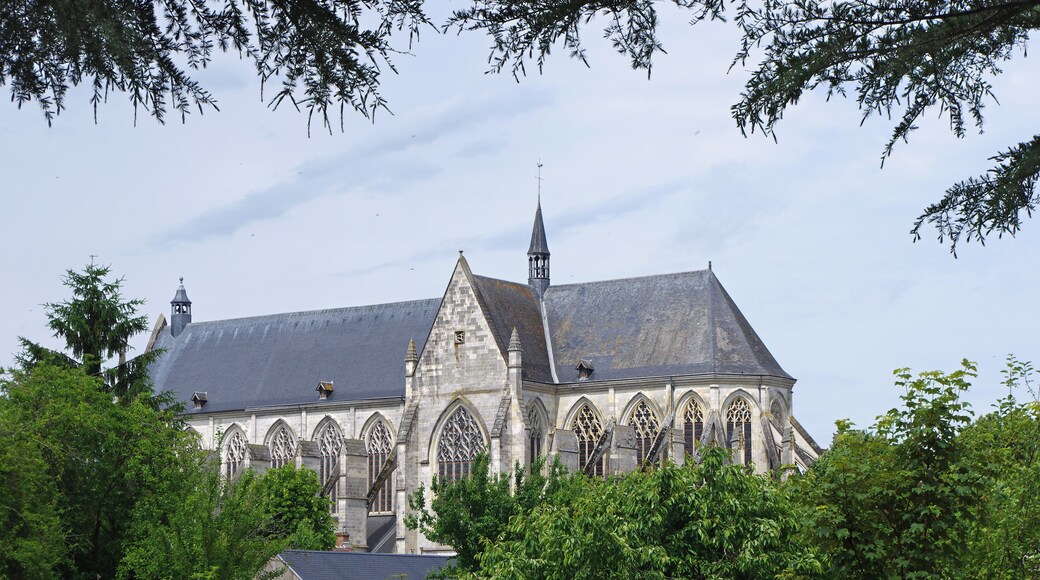
Basilique Notre-Dame de Cléry-Saint-André. Lieu de dévotion, suite à la découverte sur le site d'une statue de la Vierge enfouie dans le sol. Construction d'une église, vers 1280. L'église est une étape sur le chemin de Compostelle. L'église est agrandie et transformée en collégiale par Philippe le Bel (1309) En 1428, pendant la guerre de cent ans, l'église est détruite par les troupes anglaises de Salisbury (il ne reste que la tour carrée). 15 août 1443, le voeu de Dieppe. Devant la ville, le dauphin Louis (futur Louis XI), fils du roi Charles VII, implore à genou la Vierge de Cléry. Il fait le voeu de reconstruire la collégiale si la Vierge l'aide à remportera victoire contre les anglais à Dieppe. Dunois, qui commandait les troupes royales remporte la victoire. Le 30 août 1483, Louis XI meurt, avant la fin de la construction de l'église. Il sera enterré dans l'église de Cléry-Saint-André, au contraire des autres rois de France qui sont enterrés à Saint-Denis. Une bulle du pape Léon XIII du 2 février 1894 fait de l'église une basilique. Basilica of Our Lady of Clery-Saint-André. Place of worship, following the discovery of the site of a statue of the Virgin buried in the ground. Construction of a church in 1280. The church is a step on the way to Compostela. The church was enlarged and transformed into college by Philip the Fair (1309) In 1428, during the Hundred Years War, the church was destroyed by British troops in Salisbury (there is only the square tower). August 15, 1443, the vow of Dieppe. To the city, the Dauphin Louis (the future Louis XI), son of King Charles VII, to implore the Virgin of Clery knee. He vowed to rebuild the college if the Virgin with a win victory against the English in Dieppe. Dunois, who commanded the royal troops wins. August 30, 1483, Louis XI died before the end of the construction of the church. He will be buried in the church of Clery-Saint-Andre, unlike other kings of France are buried in Saint-Denis. A bull of Pope Leo XIII of February 2, 1894 made the church a basilica.
Basilique Notre-Dame de Cléry. A gauche (nord), la tour carrée, seul élément restant de l'église d'origine détruite par les troupes anglaises de lord Salisbury en 1428. To the left (north), the square tower, the only remaining element original church was destroyed by the British troops of Lord Salisbury in 1428.
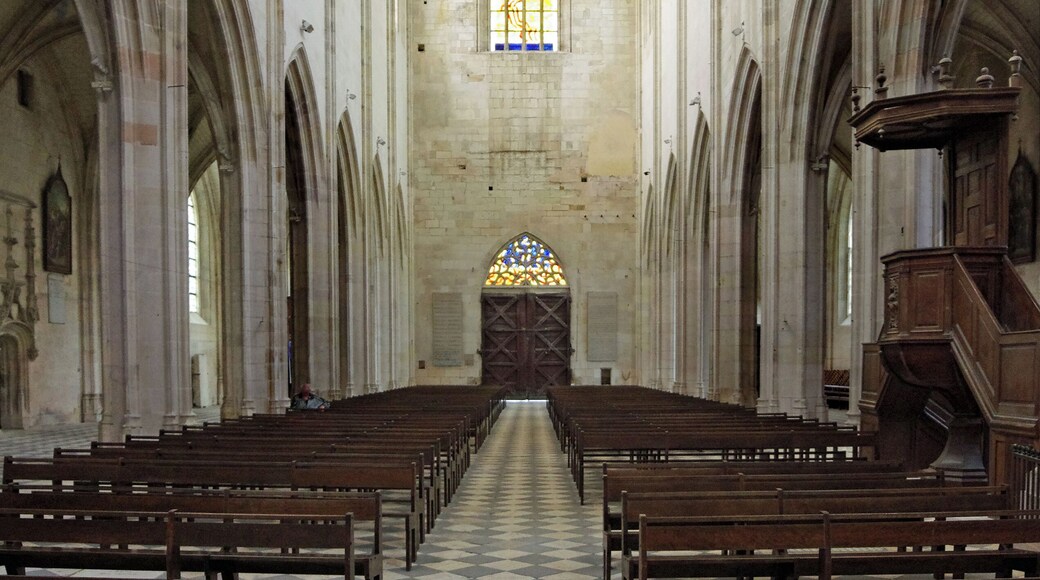
Notre-Dame de Cléry. La nef. La nef a sept travées et deux collatéraux. Avec ses 78 mètres de long et ses 27 mètres de hauteur sous voûtes, l'église atteint les dimensions d'une petite cathédrale.
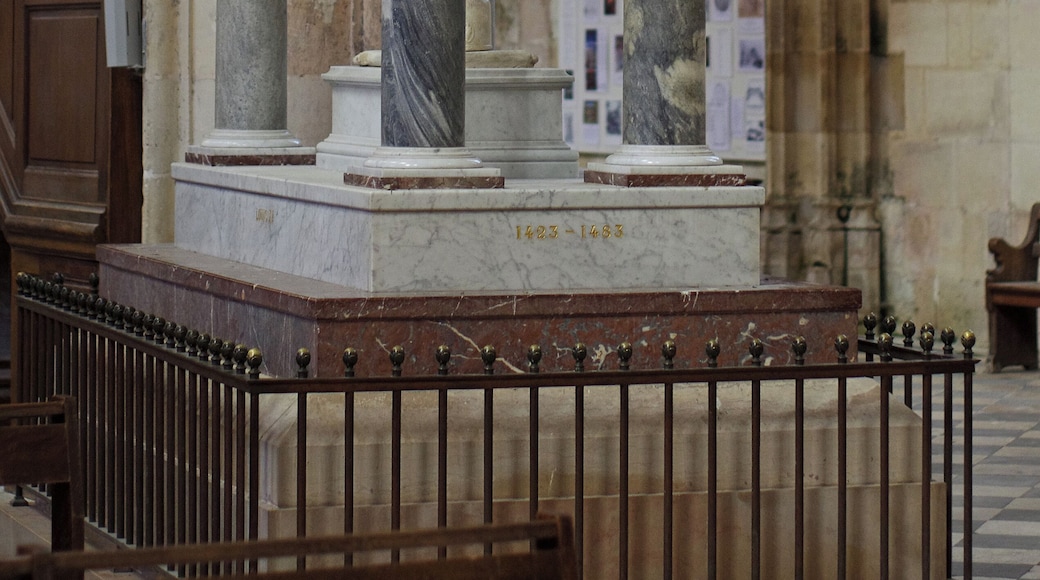
Le tombeau de Louis XI (1423-1483) : roi de 1461 à 1483. Fin stratège, Louis XI mit fin à la guerre de Cent ans (traité de Picquigny, 29 août 1475), agrandit le royaume de France, restaura l’autorité royale en affaiblissant les puissances féodales. Il fit édifier la collégiale de Clery-Saint-André dans laquelle il se fit inhumer. Pour la première fois dans l’architecture funéraire, le mort n’est plus représenté en gisant mais en orant (priant). La statue d'origine de Louis XI, en cuivre et bronze doré, représentait le roi en habits de chasseur, priant à genoux devant Notre Dame sur un coussin, servant de prie-dieu, aux couleurs des armes de France. Elle était l'œuvre de l'orfèvre Conrad de Cologne et du fondeur Laurent Wrine. Le 2 avril 1562, le tombeau du roi fut détruit par les protestants après la prise de la ville d’Orléans par les armées du prince de Condé. Au XIXe siècle, le sculpteur Beauvallet puis Barberon reconstituèrent une nouvelle sépulture qui figure depuis dans la nef de l'église. En 1896, le docteur Duchâteau effectue l'inventaire du caveau royal et constate la présence de cinq morceaux de crâne. La base d’un crâne scié et une mâchoire, attribués à Charlotte de Savoie. La seconde épouse de Louis XI, Charlotte de Savoie, fut inhumée auprès de son mari à Clery. Une voûte crânienne sciée, une mâchoire et un fragment de la partie nasale attribués à Louis XI. Le reste des ossements a disparu en 1792 après le passage des révolutionnaires. The tomb of Louis XI (1423-1483): King 1461 to 1483. Strategist, Louis XI ended the Hundred Years War (Treaty of Picquigny, August 29, 1475), expanding the kingdom of France, restored the royal authority by weakening the feudal powers. He built the college of Clery-Saint-André in which he was buried. For the first time in the funerary architecture, death is no longer represented by lying but praying (praying). The original statue of Louis XI, copper and gilded bronze, was the king clothes hunter kneeling in prayer in front of Notre Dame on a cushion, serving prie-dieu, the colors of the arms of France. It was the work of the goldsmith Conrad of Cologne and the founder Laurent Wrine. On 2 April 1562, the tomb of the king was destroyed by the Protestants after the capture of the city of Orleans by the armies of the Prince de Conde. In the nineteenth century, the sculptor Beauvallet Barberon then reconstituted a new tomb contained from the nave of the church. In 1896, Dr. Duchateau made the inventory of the royal tomb and found that five pieces of skull. The basis of a skull and jaw sawn, assigned to Charlotte of Savoy. The second wife of Louis XI, Charlotte of Savoy, was buried beside her husband in Clery. A cut calvaria, a jaw and a fragment of the part attributed to nasal Louis XI. The rest of the bones disappeared in 1792 after the passage of the revolutionaries.
Best Western Hotel d'Arc

Best Western Hotel d'Arc

4 out of 5
37 Ter, Rue de la Republique Orléans Loiret
Stay at this hotel in Orléans. Enjoy free WiFi, breakfast (surcharge), and 24-hour room service. Our guests praise the helpful staff in our reviews. Popular ...
Best Western Hotel d'Arc
B&B Hotel Orléans Nord Saran

B&B Hotel Orléans Nord Saran

3 out of 5
Chemin des Sablons Saran Loiret
Stay at this hotel in Saran. Enjoy free WiFi, free parking, and breakfast (surcharge). Our guests praise the property condition in our reviews. Popular attractions ...
B&B Hotel Orléans Nord Saran
Suite - Home Orleans Saran

Suite - Home Orleans Saran

4 out of 5
99 impasse des Moulins Saran Loiret
Book a stay at this business-friendly hotel in Saran. Enjoy free WiFi, free parking, and breakfast (surcharge). Our guests praise the helpful staff and the property ...

Suite - Home Orleans Saran
Lowest nightly price found within the past 24 hours based on a 1 night stay for 2 adults. Prices and availability subject to change. Additional terms may apply.
Appart'hôtel Odalys City - Orléans Centre

Appart'hôtel Odalys City - Orléans Centre

26 rue du Faubourg Saint Jean Orléans
Stay at this aparthotel in Orléans. Enjoy free WiFi, breakfast (surcharge), and a fitness center. Our guests praise the property condition in our reviews. Popular ...

Appart'hôtel Odalys City - Orléans Centre
Aparthotel Adagio Access Orléans

Aparthotel Adagio Access Orléans

3 out of 5
3 rue Jean-Francois Deniau Orléans Loiret
Book a stay at this business-friendly aparthotel in Orléans. Enjoy free WiFi, breakfast (surcharge), and laundry facilities. Popular attractions Sports Hall ...
Aparthotel Adagio Access Orléans
Hôtel Arago - Entrée autonome, réception en ligne - Encore Mieux

Hôtel Arago - Entrée autonome, réception en ligne - Encore Mieux

3 out of 5
37 Rue du Commandant Arago Orléans Loiret
Stay at this aparthotel in Orléans. Enjoy free breakfast, free WiFi, and daily housekeeping. Popular attractions FRAC Centre and Place du Martroi are located ...
Hôtel Arago - Entrée autonome, réception en ligne - Encore Mieux
Lowest nightly price found within the past 24 hours based on a 1 night stay for 2 adults. Prices and availability subject to change. Additional terms may apply.

Cities near Clery-Saint-Andre